Pashtun Times Latest News
By: Dr. Asim Yousafzai
A critical perspective on Pakistan’s rare earth ambitions, critical minerals and the gap between geological potential and economic reality
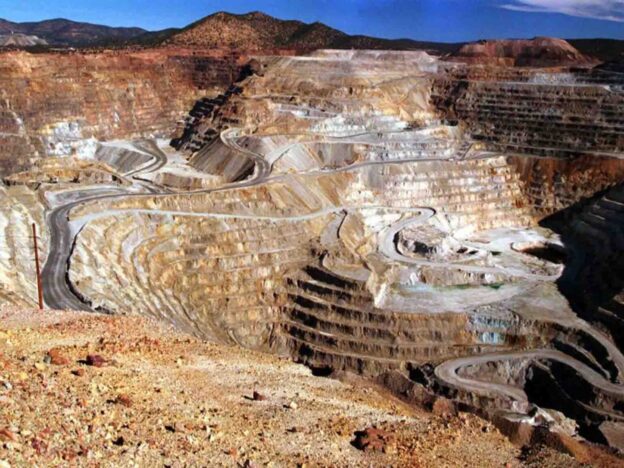
Pakistan is once again presenting its mineral wealth as a possible economic rescue. At the Pakistan Minerals Investment Forum (PMIF) in November 2026, the government invited international investors to explore the country’s copper, gold, lithium, antimony and other critical minerals. More than 10,000 participants from over 60 countries attended, and 13 agreements and memoranda of understanding were announced. The government also promised to move beyond exporting raw minerals towards domestic processing and refining. The ambition is understandable. The question is whether Pakistan possesses the technical, industrial and institutional capacity to deliver it.
Pakistan has genuine geological potential, but geological potential is not a mineral industry. A country does not become a major supplier of rare earth elements simply because its rocks contain rare earth-bearing minerals.
The geology is real; the commercial claims remain uncertain
Pakistan’s most interesting rare earth prospects are associated with several distinct geological environments. In northwestern Pakistan, the Peshawar Plain Alkaline Igneous Province contains carbonatite and alkaline complexes at Sillai Patti, Koga, Loe Shilman, Warsak and Jambil. These rocks are scientifically significant because carbonatites and associated alkaline intrusions can host minerals containing lanthanum, cerium, neodymium and other rare earth elements.
The Kohistan Island Arc and Kohistan Batholith provide another exploration setting, with alkaline syenites and pegmatites containing minerals such as monazite and chevkinite. Further south, monazite-bearing heavy-mineral concentrations have been reported in the Siwalik sedimentary formations. These geological occurrences deserve systematic exploration and modern mineralogical analysis.
However, the distinction between an occurrence, a resource and a commercially recoverable reserve is fundamental. Pakistan has not yet demonstrated an internationally established, economically recoverable rare earth reserve or a significant commercial rare earth mining and separation industry. The US Geological Survey’s country information documents Pakistan’s production of several minerals, including copper and antimony, but does not identify it as a significant rare earth producer. This is where the political narrative often runs ahead of the science.
The missing link: expertise, processing and industrial capacity
Rare earth mining is only the beginning of a demanding industrial chain. Ore must be mined, crushed, beneficiated and chemically processed. Individual rare earth elements then have to be separated, purified and converted into compounds or metals. For some applications, further processing is required to manufacture alloys and permanent magnets.
These are technically difficult, capital-intensive and environmentally sensitive operations. Monazite, for example, can contain thorium and uranium, creating additional requirements for radiation monitoring, waste management and environmental regulation.
Pakistan’s weakness is not simply a shortage of mineral deposits. It is the shortage of the industrial ecosystem needed to turn those deposits into high-value products. A 2025 strategy document from Pakistan’s Planning Commission identifies inadequate processing facilities, a shortage of trained mining and processing personnel, and the absence of dedicated quality training institutions as major constraints. The Institute of Cost and Management Accountants of Pakistan has similarly highlighted fragmented governance, inadequate infrastructure, limited processing capacity, security risks and shortages of skilled workers.
Pakistan has geological researchers, university departments, the Geological Survey of Pakistan, mining engineers and specialists in mineralogy. But the country’s long-established institutional strengths and public-sector expertise have been much more visible in petroleum and hydrocarbon exploration than in modern hard-rock mineral exploration, economic geology, mineral processing and rare earth metallurgy.
The distinction matters. Asking a predominantly hydrocarbon-oriented technical establishment to build a sophisticated rare earth industry without investing in the necessary specialisms is rather like asking a cardiologist to perform brain or orthopaedic surgery. Both may be doctors, but their expertise is not interchangeable. Pakistan needs specialists in economic geology, geochemistry, geophysics, mineral processing, hydrometallurgy, separation chemistry, mine engineering and environmental management. It also needs laboratories capable of producing independently verifiable assays and resource estimates.
The comparison with India is instructive. India has spent decades building institutions and industrial capabilities in atomic minerals, mineral exploration, rare earth processing and strategic materials. Its experience demonstrates that even a country with geological resources and technical institutions faces difficult challenges in scaling up processing and manufacturing. Pakistan cannot skip those stages simply by signing memoranda with foreign partners.
The recurring promise of a national jackpot
Pakistan’s political history has a recurring pattern: the announcement of a spectacular discovery or an enormous natural-resource estimate is presented as the solution to the country’s economic problems. A Messiah is expected to arrive, unlock the country’s hidden wealth and rescue the nation. The difficult work of building institutions, technical capacity, infrastructure and a productive industrial economy is often pushed into the background.
A particularly revealing example came in 2019, when Prime Minister Imran Khan suggested Pakistan might be on the verge of an oil and gas jackpot. In March that year, he spoke of the possibility of discovering a very large offshore reserve and said that, if successful, Pakistan would be in a different league. The public excitement was enormous. But in May, the Petroleum Division confirmed that the Kekra-1 offshore well, drilled to more than 5,500 meters by a consortium including ExxonMobil, ENI, Pakistan Petroleum Limited and Oil and Gas Development Company, had found no commercial oil or gas reserves. The drilling cost was reported at approximately Rs15 billion.
The problem was not that a country explored for oil and failed. Exploration is inherently uncertain, and unsuccessful wells are part of the industry. The problem was allowing preliminary indications and political optimism to create public expectations of an imminent economic transformation before commercial reserves had been established.
The same pattern appears in today’s mineral debate. In August 2026, Planning Minister Ahsan Iqbal spoke of mineral endowment exceeding $7 trillion. In November, Deputy Prime Minister Ishaq Dar reportedly placed the value of Pakistan’s natural resources at $8–10 trillion, including minerals, hydrocarbons, gemstones and rare earth materials. Yet Pakistan’s own government has acknowledged that much of its mineral potential remains underexplored and requires verification. Dawn’s editorial response to the $7 trillion claim rightly questioned how such a valuation had been calculated.
Thar coal provides another lesson in the difference between a geological figure and an economic outcome. The estimated 175 billion tons of lignite in the Thar coalfield is a substantial geological resource, documented by the Sindh government’s Thar Coal and Energy Board. But public claims that its energy content could sustain 100,000 megawatts of electricity for centuries do not mean that this electricity can be generated economically, sustainably or with the necessary infrastructure. Lignite is low-grade coal with high moisture content; extraction, transport, water requirements, power-plant efficiency and environmental costs matter. A resource estimate is not an electricity supply plan.
Foreign investment is not the same as an operating industry
Pakistan is attracting international attention, particularly because the United States and other countries want to diversify critical-mineral supply chains away from excessive dependence on China. But diplomatic interest should not be confused with committed capital, completed exploration or commercial production.
The 2025 agreement between US Strategic Metals and Pakistan’s Frontier Works Organization was presented as a route to extracting and processing antimony, copper, tungsten and rare earths, with a projected $500 million cash-flow target. Yet the Center for Strategic and International Studies (CSIS), in its April 2026 assessment, raised serious questions about the origin of the materials reportedly shipped to the United States and the commercial readiness of the proposed processing partner. It noted that Pakistan had no established commercial production of rare earths or tungsten. The agreement may create opportunities, but its financial projections should not be mistaken for realized investment or production.
The same caution applies to the 13 agreements announced at PMIF26. They demonstrate that Pakistan is actively courting investors and technical partners. They do not demonstrate that 13 operational mines, processing plants or refining facilities are about to emerge. The US Trade Administration’s March 2026 assessment identifies exploration, geological surveying, modern mining equipment and mineral-processing technology as opportunities in Pakistan. These are precisely the capabilities that still need to be developed.
For India, the implications are significant. New Delhi should monitor Pakistan’s mineral diplomacy, particularly its efforts to attract American, Chinese, Turkish and Gulf investment. Critical minerals are increasingly important to electric vehicles, renewable energy, electronics, defense technologies and advanced manufacturing. But India should distinguish between Pakistan’s geological promise and its ability to become a reliable supplier. The latter requires transparent resource estimates, political stability, secure infrastructure, environmental safeguards, technical expertise and commercially viable processing facilities.
Pakistan needs institutions, not another miracle
Pakistan certainly has mineral potential. Its carbonatites, alkaline igneous rocks, copper-gold systems and heavy-mineral deposits deserve serious scientific investigation. Dismissing these prospects would be as misguided as accepting every political estimate of their value.
But the country must confront an uncomfortable reality: it cannot build a modern critical-minerals industry through slogans, investment conferences and announcements of trillion-dollar treasures. It needs sustained investment in geological mapping, drilling, independent laboratory testing, mineral-processing research, specialist education and industrial infrastructure. It must also establish credible environmental and community safeguards, particularly in regions where security and local participation are essential to successful projects.
The real question is not whether Pakistan has minerals. It is whether Pakistan can develop the scientific and industrial capacity to extract, process and sell them competitively.
For decades, the country has waited for a Messiah—whether an oil discovery, a coalfield, a foreign investor or a charismatic political leader—to solve problems that require long-term institutional reform. The rare earth story could become another chapter in that history. Or it could become the beginning of a more serious approach to economic development.
Geology creates an opportunity. Expertise, institutions and industrial capability turn it into wealth. Pakistan has yet to demonstrate that it can reliably do the latter.
Dr. Asim Yousafzai is a U.S.-based geoscientist, environmental researcher, and commentator specializing in South and Central Asian geopolitics and natural resources. He holds a Ph.D. in environmental science and geology from Kent State University and is the author of Afghanistan: From Cold War to Gold War.