Pashtun Times Latest News
By Zalmay Khan
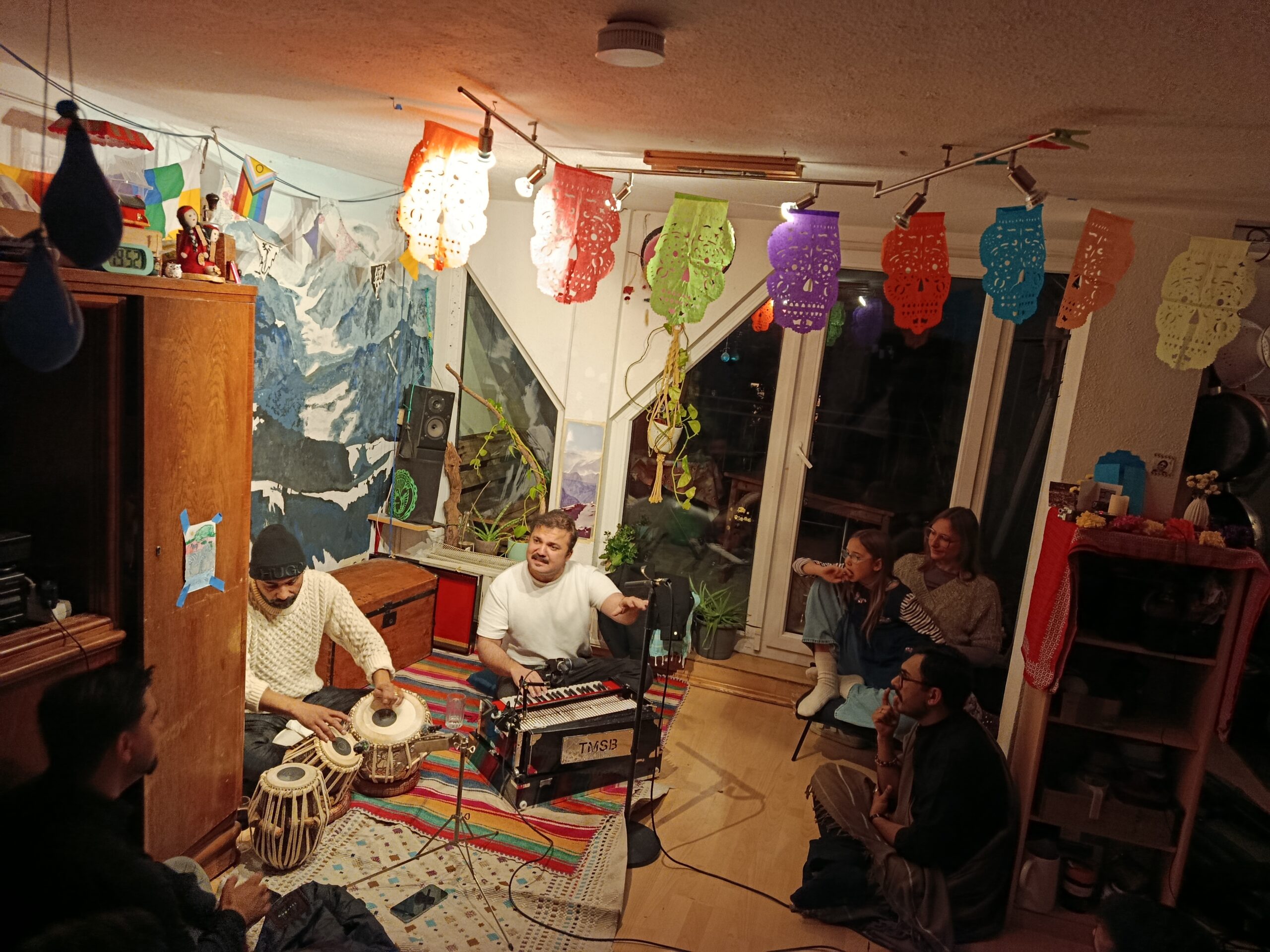
Coming all the way from the war-affected Pashtun region of Pakistan, the young Pashtun musician Gulwareen Bacha captivates the audience with beautiful Pashto and Urdu tunes at a living-room concert here in Berlin.
During a spontaneous visit to Berlin, Gulwareen connected with local music enthusiasts and students, who proposed introducing his Pashto music and his talent to a culturally diverse audience. The idea soon took shape in a cozy intimate Wohnzimmer (living-room) concert in Berlin-Mitte.
The gathering brought together local Germans, Latin Americans, art students, members of the Pakistani and Afghan diaspora, and Pashtuns displaced by conflict who now live in exile in Germany. Through his performance, Gulwareen offered the audience an opportunity to experience the richness of Pashto and Urdu musical traditions, creating a space for cultural exchange and connection.
On a chilly autumn Saturday evening, a cosy living room in the heart of Berlin became a meeting place for people from diverse cultural backgrounds. Men, women and kids, seated in a living room combined with the kitchen, hosted by Camilo who comes from Chile and lives here with his German family, and a student in the Art University in Berlin. In his cozy apartment, the diverse ethnic folks were occupying sofas, chairs, stools, and even the floor, while others stood in the kitchen. Some listened with deep interest- imbibed in the tunes, while others recorded the performance to seize the evening and learn the tunes. All were drawn together by the soulful and spiritual melodies of Pashto music, brought to life through Gulwareen’s voice. Performing classical Pashto ghazals written by Hamza Baba alongside Urdu ghazals popularised by legendary maestros such as Ustad Mehdi Hassan and Ustad Nusrat Fateh Ali Khan, Gulwareen demonstrated a remarkable command of classical music with presenting a spectrum of Ragas (scales) and Taals (beat formation). Reflecting on Gulwareen’s musical journey and his recent performances in Berlin, Afrasiab Khattak aptly remarked: “Gulwareen has a very sweet voice, and his command of music has also improved significantly, may he be protected from the evil eye.”
Alongside his own musical education and artistic development, Gulwareen remains committed to sharing his knowledge and encouraging others to learn. He opens new avenues for music enthusiasts and emerging performers, helping them discover and develop their artistic potential. In this sense, he plays the role of a bridge between musical tradition and innovation, connecting the richness of the past with the creative possibilities of the future.
Gulwareen’s music is rooted in the values of peace, love, and tolerance, while also advocating girls’ education in Pakistan and Afghanistan. He has collaborated on musical projects with the German development organisation GIZ and Nobel Peace Prize laureate Malala Yousafzai. Gulwareen has also produced HarDam, a music project promoting transgender rights and raising public awareness about the challenges faced by transgender communities in Pakistan.
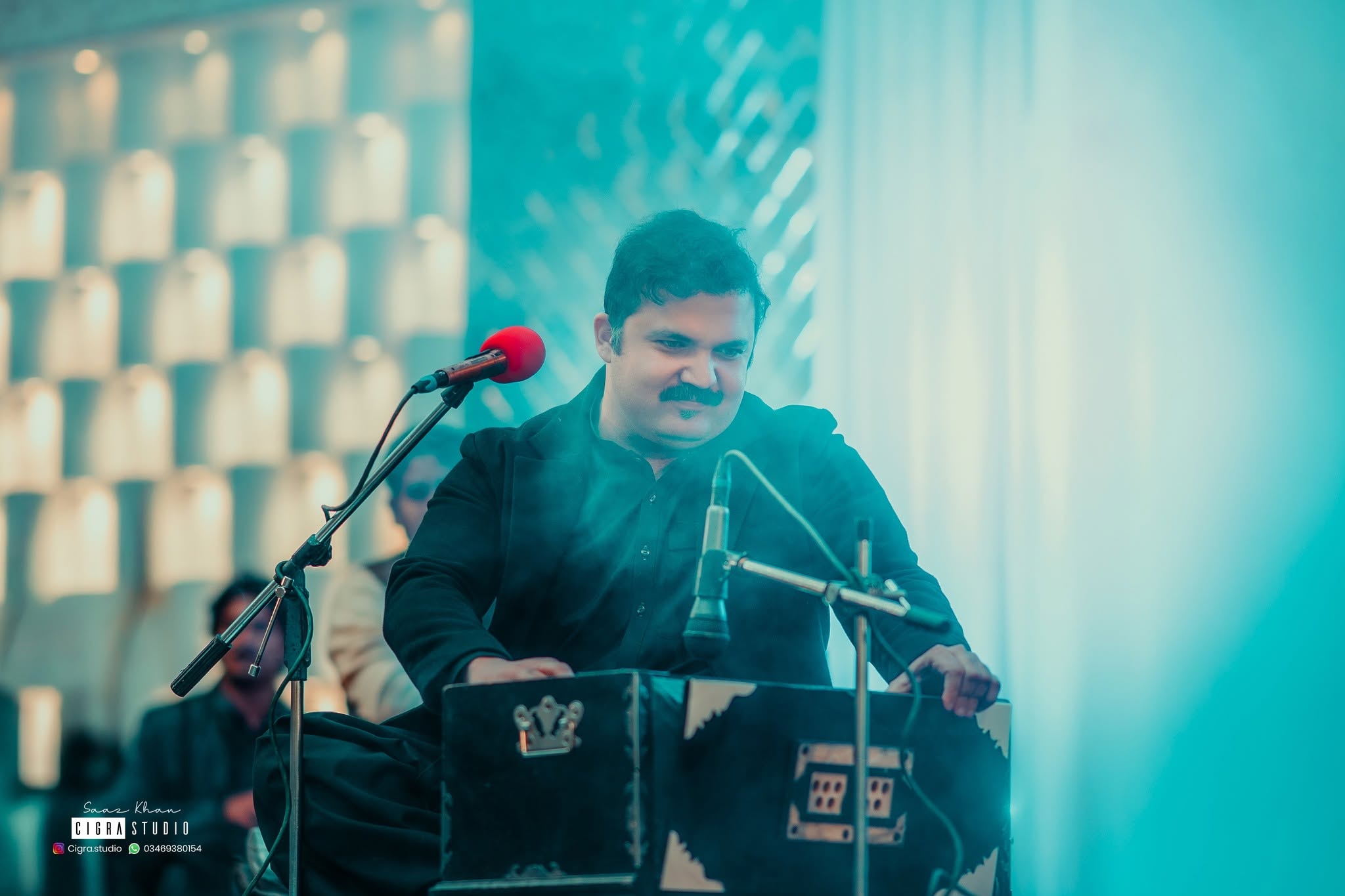
Gulwareen Bacha believes that art and culture have the power to bring people together. For him, Pashto music, even when performed in the intimate setting of an apartment living room, can serve as a meaningful medium of cultural exchange and direct interaction with international audiences.
The prevailing insecurity in Pashtunland, coupled with both formal and informal restrictions, particularly those imposed on music, has severely undermined the region’s musical culture. For me, the evening and the mix of different ethnicities evoked powerful memories of my childhood in Bannu in the late 1990s. I could almost feel myself sitting once again on the bare, unpaved floor of a traditional hujra or in an open Maidan in my hometown, listening to live Pashto music. In those days, it was also possible to see Western visitors sitting alongside locals, enjoying traditional musical performances while smoking Chillum (Huqqa).
I still remember Kochian (Pashtun’s nomadic groups), Afghans, sometimes Germans, Britishers, French, and Irish visitors who used to travel to Pashtunland during that period. Some were tourists, while others stayed for extended periods, working on humanitarian and vocational development projects. Local communities and foreign visitors shared a peaceful social environment in which music was welcomed as a source of enjoyment and cultural connection rather than viewed as a taboo.
Unfortunately, the situation has changed dramatically over the past few decades particularly after 9/11. The spread of extremism and terrorism has severely affected the cultural and musical landscape of Pashtun society. Music has increasingly been treated as taboo by certain religious extremist groups in Pakistan and beyond. Musicians have faced violent attacks, beatings, humiliation, and even murder. Their musical instruments have been destroyed or burned before their eyes. As a consequence, many local musicians have been on the move, forced to abandon their profession, retreat into their homes, or relocate to larger cities for their safety while some have even fled the country. With music being abandoned, the local society has increasingly tilted towards extremism, and tolerance has all but disappeared.
In this difficult social milieu, Gulwareen continues to raise his voice through music. His repertoire celebrates love, peace, and tolerance, while also advocating transgender rights and girls’ education on both sides of the Durand Line. He is equally committed to bringing fresh ideas, innovation, and classical influences into Pashto music, demonstrating that tradition and modernity can enrich one another.
In a region where musicians receive little financial support and often struggle to make a sustainable living from their art, Gulwareen’s perseverance is particularly significant. Through his dedication, he is not only keeping Pashto musical traditions alive but also creating new opportunities for their appreciation beyond geographical and cultural boundaries.
His performance in Berlin was more than a musical gathering. It was an encounter between cultures, a reminder of a once-vibrant tradition, and an expression of the enduring power of music to connect people across languages, histories, and borders. By bringing the melodies and rhythms of Pashtunland into the living rooms of Berlin, Gulwareen is building a cultural bridge between his homeland and an international audience.
Writer: Zalmay Khan
The writer comes from Bannu and is currently based in Berlin. He is a freelance journalist with an academic background in English Literature and Political Science.